
A Mount Dora Tradition
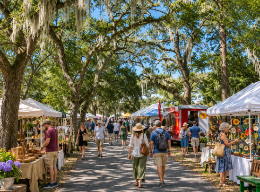
No one has ever left Renninger’s with only the thing they went there to buy. The Antique Extravaganza returns to Renninger's on US 441 the weekend of November 20 to 22, and if history is any guide, you’ll walk in looking for a set of drawer pulls and walk out with a chandelier you have no plan for.
More than eight hundred dealers spread across the show field, the antique center, and the pavilions, and somewhere around booth two hundred, your sense of scale quietly leaves the building. That's how you end up with a farm table four inches too wide for your dining room strapped into the truck bed, telling yourself the furniture can be arranged to make it fit.
The Friday regulars know exactly what they're doing. They're parked by seven, coffee in hand, waiting for the gates to open at eight. There’s still plenty to discover if you arrive a little later. Just give yourself enough time to wander.
Every Chandelier Needs a Ceiling
Here's the problem with that chandelier. It needs somewhere to hang, and a big antique light fixture looks a little lost under an eight-foot ceiling. Shopping for antiques gets you thinking about the homes they were made for. You start picturing where that chandelier might hang or how the farm table would look in a dining room with wide windows and enough space to pull out every chair. That may be why so many Renninger's regulars end up drifting toward the older homes in Mount Dora and Eustis.
Both towns have the real thing: homes built in the late 1800s and early 1900s with tall ceilings, deep porches, wide trim, and floors that have been creaking politely for more than a hundred years. Walk down Donnelly Street in Mount Dora or through the Eustis historic district and you'll see why people fall for them.
These homes are beautiful, but they come with their own set of questions, and it’s better to have the answers before you fall in love on a Saturday afternoon.
What Needs to be Inspected
An older home deserves a thorough inspection, and in Florida that often means more than one. Many insurers ask for a four-point inspection on older homes, covering the roof, electrical, plumbing, and HVAC, and a wind mitigation report can make a real difference in your premium.
A few areas deserve a closer look. Older wiring and outdated electrical panels can make insurance harder to get. Cast iron and galvanized pipes were standard once, and they tend to wear out with age. Many older homes sit on piers, so check the foundation and framing for settling, moisture, and termite damage. And keep an eye on the roof, since insurers care a great deal about its age.
None of this is meant to scare anyone off. It's just the honest list. A well-loved older home with updated systems can be a wonderful buy. One that has been charming its way past repairs for decades is a different story, and the inspection is how you tell the difference.
Plaster, Heart Pine, and Wavy Windows
The features that make older homes special are also the ones that ask a little more of you.
Plaster walls are solid, quiet, and beautiful. When they crack, though, it's not a quick drywall patch. You need someone who knows the craft, and those folks stay busy.
Then there's heart pine, one of the great treasures of old Florida houses. It came from old-growth longleaf pine, and it's remarkably tough, which is a good thing, because it has been holding up a century of family dinners. Refinishing it takes care, and replacing a damaged board means hunting down reclaimed wood that matches. You'll also learn exactly which board squeaks at two in the morning, and so will everyone else in the house.
And the windows. Sashes stick, cords break, and glazing dries out. Still, there's nothing like morning light through that old wavy glass, and restoring the originals is often possible and often worth it. Just plan for the cost, along with any upgrades needed for storm protection and energy efficiency.
The best advice is to budget for upkeep from day one, not after the first surprise.
What a Historic Designation Means
Plenty of homeowners love knowing the character of their street is protected. The tradeoff is a few extra steps when you renovate. If a home sits in a designated historic district or is individually listed, exterior changes like replacing windows, switching roofing materials, or building an addition may need the city's approval before work begins. Interior work is usually more flexible, but the rules vary by town and by property.
Check with the City of Mount Dora or the City of Eustis about what applies to a specific home before you make plans for it, and ideally before you buy.
Old Charm or New Construction
For contrast, head south to Apopka or over to the newer neighborhoods in Tavares, where new construction keeps going up. Those homes come with modern systems, builder warranties, energy-efficient windows, and often lower insurance costs. They also tend to come with smaller lots, an HOA, sometimes a CDD (community development district) fee, and ceilings that may not have room for a hundred-year-old chandelier.
Older homes give you character no builder can order, mature oaks, and neighborhoods where you can walk to dinner. They also ask for more maintenance, more patience, and a closer look at insurance. We have seen people fall happily in love with both. What matters is being honest about how you want to live and what you’re willing to take care of.
So enjoy Renninger's this year. Go early, bring a tape measure, and maybe measure the truck bed while you're at it. And if that chandelier has you thinking about a house to match, the Loretta Maimone Team would love to help you find one.